A plain uniform identifies a worker only while that worker is close enough to recognise. A well-planned printed shirt carries the same logo, colour and role information through exhibitions, retail floors, delivery routes and outdoor campaigns. By the end, you will know how to choose the design, printing method, garment and order quantity that make team branding visible and practical.
Key takeaways
- Use high-contrast text and keep the main message to six words or fewer.
- Choose cotton for comfort, polyester for active work and blends for everyday teams.
- Approve a washed sample before ordering the full shirt quantity.
- Compare quotes for fabric, print size, colours, setup fees and delivery time.
Why a Printed Shirt Works Better Than a Plain Uniform or Giveaway
A printed shirt turns each team member into mobile signage. The large, front-facing area carries a logo, colour and short message while the wearer moves through customers, queues and work areas. That makes Custom printed shirts for businesses in Mumbai useful when people must identify staff quickly across:
- Trade shows and corporate events
- Retail activations and workshops
- Delivery operations and outdoor campaigns
| Format | Main advantage | Best use | Limitation |
|---|---|---|---|
| Shirt | Large front branding and a shared team appearance | Moving among customers and finding staff across a venue | Uncomfortable garments get removed or worn badly |
| Plain uniform | Establishes a consistent dress standard | Routine operations where branding is secondary | Does not explain who the team represents |
| Cap | Visible above crowds and from a distance | Outdoor work and broad-visibility campaigns | Small branding area and weak close-range identification |
| Lanyard | Keeps an ID card close to the viewer | Reception desks, workshops and controlled access | Hard to read while the wearer is moving |
| Promotional item | Extends the campaign after the interaction | Giveaways and customer retention | Does not identify staff during the event |
A shirt strengthens trust when customers can match a recognisable person to the organisation. It also improves wayfinding: a visitor can look for the same colour and logo instead of asking every passer-by.
Choose shirts for temporary campaigns when the team needs one visual system without changing permanent uniforms. Keep colour consistent, place the logo where it faces the audience, and print only information readable at normal distance. Fabric comfort matters in Mumbai’s heat and humidity; a shirt that clings, traps odour or restricts movement undermines the brand.
How to Design a Shirt People Can Read at Normal Distance
Set the smallest important text at least 20 mm high for a 3 m viewing distance, then test it from that distance without zooming. A logo should occupy the space needed to recognise it quickly, not merely fit inside the decoration area.
| Placement | Practical starting size | Best use |
|---|---|---|
| Left chest | 80–100 mm wide | Recognition and a tidy uniform |
| Centre chest | 220–280 mm wide | Strong front-facing branding |
| Back | 280–320 mm wide | Reaching people walking behind staff |
| Sleeve | 70–90 mm wide | Side visibility and secondary marks |
| Full front | 280–320 mm wide | High-impact event artwork |
Use a left-chest logo for staff identity, a back graphic for moving teams, and a sleeve mark when people are viewed from the side. Add a name and role when customers need to identify or approach individuals; add a phone number only for field teams.
Use a QR code or event date when the action has clear value. Extra slogans, contacts and hashtags turn a readable shirt into clutter.
Your production brief should state:
- The viewing distance and minimum letter height
- Garment colour and brand colour references
- Separate vector files for front, back and each sleeve
- Fixed-point measurements for every placement
- Whether names, roles or dates change between shirts
Supply vector artwork for logos and type, not a low-resolution raster image. A light logo on a dark shirt needs an opaque underbase or white-ink layer; the same artwork on white does not. A monitor preview cannot guarantee screen ink, DTG ink, DTF film or embroidery-thread colour.
If you are comparing branded shirts near me, approve a physical colour and placement sample, not only a screen proof.
Which Printing Method and Fabric Suit Your Team’s Work?
A repeated logo across 50 or 500 shirts calls for a different process from ten shirts with individual names. Match the decoration to the artwork, quantity and working conditions before choosing the blank garment.
| Method | Best fit | Watch for |
|---|---|---|
| Screen printing | Moderate or large quantities with repeated artwork | Setup is spread across more shirts; poor value for one-off names or changing designs |
| Direct-to-garment | Detailed artwork on cotton or cotton-rich shirts | Dark garments need pre-treatment and a white-ink layer, which can add thickness |
| Direct-to-film | Small batches, full-colour graphics and individual names | Raised film feel and weaker breathability under a large solid print |
| Heat transfer | Short runs, names, numbers and straightforward graphics | Poor application or washing can cause peeling |
| Vinyl | Short runs and bold, single-colour shapes | Fine detail and multicolour artwork become difficult |
| Embroidery | Polos, jackets and caps | Dense stitching can pucker fabric; avoid large jersey graphics |
For Mumbai’s heat and humidity, cotton absorbs perspiration and feels less clammy at first; polyester and blends dry faster and hold colour well but can feel warmer and retain odour. Compare GSM, opacity, comfort, drying speed and print durability, not just the design.
A lightweight shirt improves comfort, while a heavier one can provide better opacity and structure.
Test the actual fabric and print in the work environment: wear it through a shift, wash it using the planned method, and check softness, odour, colour and edge lifting.
Businesses comparing custom t shirt printing in mumbai should request the garment composition, GSM, decoration method and colour reference in writing; a screen preview cannot guarantee the final ink or thread colour.
How to Approve Samples and Calculate the Right Quantity
Approve one physical shirt, not a screen preview. Compare it with the approved artwork for garment colour, colour accuracy, registration between colours, ink coverage, cracking, peeling, stitching, opacity and print placement from a fixed point.
| Check | What to inspect | What failure indicates |
|---|---|---|
| Colour and registration | Ink or thread against the colour reference; edges where colours meet | Visible mismatch or misaligned layers |
| Coverage and placement | Solid areas, transparency, and distance from collar, side seam or sleeve | Thin coverage or a drifting logo |
| Finish and construction | Cracks, lifted edges, puckering, loose threads and distorted seams | Poor application or unsuitable fabric |
Wash the sample using the planned temperature, detergent, drying method and number of cycles. Record shrinkage, colour transfer, print movement and embroidery puckering before approving production; a fresh shirt hides failures that appear after staff wear it.
Collect sizes from the actual garment size chart, then check a pre-production shirt on representative users. Separate unisex and women’s cuts, because the same nominal size does not mean the same measurements or fit.
Use this quantity method:
- Count confirmed users by cut and size.
- Add a controlled spare allowance for replacements, concentrating on common sizes rather than guessing across every size.
- Handle late joiners and event additions through a separate replacement or top-up process.
For Mumbai orders, confirm blank-garment availability, decoration capacity, approval deadline, packing date and delivery dependencies before fixing the event date. Searching for branded shirts near me can shorten courier distance and simplify corrections, but it does not guarantee stock, colour consistency or faster production.
How to Compare Company Shirt Printing Quotes in Mumbai
Compare the complete delivered specification, not the headline per-shirt number. A low quote can hide a thinner blank, smaller decoration, or an unpriced setup charge.
| Quote item | Check in writing | Why it matters |
|---|---|---|
| Blank garment | Composition, GSM, colour and fit | A cheaper shirt can change comfort, opacity and sizing |
| Decoration | Print method, dimensions, number of colours and placement from a fixed point | Small changes alter visibility and repeatability |
| Artwork | Preparation, setup or digitising charges | Avoid surprise pre-production costs |
| Approval | Physical sample, washed using the planned detergent, temperature and drying method | Exposes shrinkage, colour transfer, cracking, peeling and puckering |
| Fulfilment | Packing, taxes, delivery, and treatment of defective or short-shipped pieces | Prevents disputes after delivery |
Local sourcing can simplify size corrections, replacement batches and late additions because you can review issues without long courier cycles. Proximity does not guarantee colour consistency, so approve a physical sample and retain its colour reference.
For repeat company shirt printing in Mumbai, keep the approved shirt style, fabric composition, garment colour, colour reference, artwork version and decoration specification. Chintan Graphics is one Mumbai option to approach with that complete brief; ask for the specification and sample in writing rather than comparing only a per-shirt number.
That record protects a consistent team identity across campaigns and reorders.
Related product
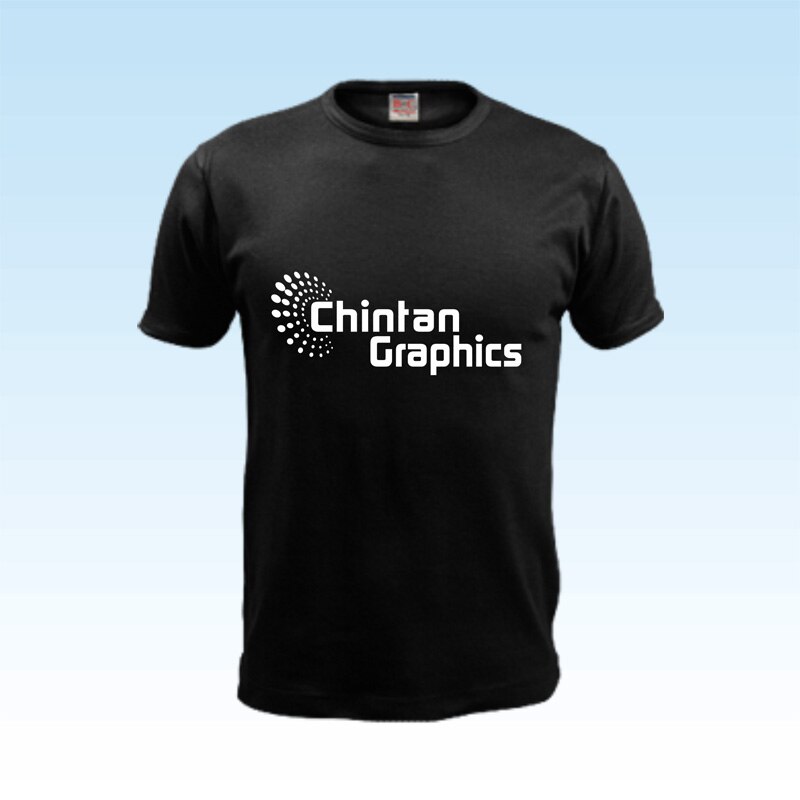 | Multicolor Printing T-Shirt ₹380 100% Cotton, White: 210 GSM, Grey & Black: 160 GSM, Regular Fit T-Shirt. Ideal for corporate events and giveaways. |
Frequently asked questions
Why use printed shirts instead of plain uniforms or giveaways?
Printed shirts combine staff identification with repeated brand exposure. A logo, team colour and short message remain visible while employees move through shops, events, queues and work areas.
How should you design a shirt people can read at normal distance?
Use strong contrast, a simple typeface and one short message. Test the artwork from several metres away, check the logo at chest size and avoid placing essential text across seams or folds.
Which printing method and fabric suit a team’s work?
Choose cotton for breathable everyday wear, polyester for active or outdoor work, and cotton-polyester blends for a balance of comfort and durability. Match the print process to the artwork, fabric and expected wash cycle.
How many printed shirts should a company order?
Count active wearers, add replacements for size changes and damage, and include extra shirts for new starters or peak events. Approve a physical sample before finalising sizes and quantities.
What should you compare in company shirt printing quotes in Mumbai?
Compare fabric composition and weight, size range, print area, number of colours, print method, sample charges, setup fees, packaging, GST, delivery date and replacement terms.
Keywords